West Bengal Election 2026: TMC vs BJP, Rigging Allegations and the Long History of Poll Violence
West Bengal election 2026: SIR voter deletions, EVM tape controversy, strongroom dispute, repolling on May 2, and 75 years of Bengal poll violence explained.
StoryRendered20 min read
Live status: updated May 2, 2026. Voting has ended in West Bengal, repolling is underway today in 15 booths in South 24 Parganas, and counting is scheduled for May 4, 2026. Claims about a final winner are not yet publishable as verified fact.
West Bengal's 2026 Assembly election has become a collision between two allegation systems.
The Trinamool Congress says the BJP, the Election Commission and central forces are trying to bend the election through voter-list revision, strongroom handling, central personnel and intimidation. The Bharatiya Janata Party says the TMC is using the older Bengal playbook: booth-level muscle, polling-agent intimidation, EVM obstruction, local fear and control over the rural political economy.
Both sides are using the word "rigging." Both sides have filed complaints. Both sides say the institutions are tilted against them. And that is exactly why Bengal is different: election disputes here are rarely about one incident alone. They sit on top of a much older history in which political power, local resource control and personal safety have been tied together for decades.
This article explains the 2026 battle in that longer frame - from the 1972 rigging accusations against Congress, through the Left Front's "scientific rigging" reputation, to TMC-era panchayat violence, the BJP's rise, the 2021 post-poll violence cases, the Special Intensive Revision of voter rolls and the May 2026 strongroom and repoll controversies.
West Bengal's 2026 election is not only a contest for 294 seats. It is a fight over who controls the story of democracy in Bengal.
294
Assembly Seats
The full West Bengal Legislative Assembly went to polls.
148
Majority Mark
The threshold for government formation.
92.93%
Turnout
Preliminary total turnout reported after both phases.
15
Repoll Booths
Repolling ordered on May 2 in Magrahat Paschim and Diamond Harbour.
What Is Verified as of May 2
West Bengal voted in two phases on April 23 and April 29, 2026.
Counting is scheduled for May 4, 2026.
The first phase recorded 93.19% turnout, according to the Election Commission.
The preliminary statewide turnout after both phases is reported at 92.93%.
The Election Commission ordered repolling in 15 polling stations in South 24 Parganas on May 2: 11 in Magrahat Paschim and 4 in Diamond Harbour.
Exit polls have generally projected a BJP surge, but they are projections, not results.
Why West Bengal Elections Feel Different
Bengal's political culture has always been unusually mobilized. Party identity reaches deep into village panchayats, unions, neighbourhood clubs, school committees, local contractors and informal welfare networks. In many rural areas, politics is not a separate activity done once every five years. It is the channel through which people access work, protection, benefits, credit, land documents and social standing.
That makes elections existential.
Losing power in Bengal can mean more than losing office. For local cadres, it can mean losing access to sand, stone, coal, transport contracts, government schemes or municipal permissions. For ordinary supporters, it can mean fear of social boycott, police neglect, physical intimidation or exclusion from local benefits.
This does not mean every allegation is true. It means every allegation lands in a state where voters have historical reasons to believe that elections can be shaped before, during and after polling day.
The 1972 Precedent: Congress and the Charge of "Semi-Fascist Terror"
The story did not begin with Mamata Banerjee or Narendra Modi.
The 1972 West Bengal Assembly election became one of the foundational grievance points in Bengal's political memory. Congress and the CPI won power, but the CPI(M) and its allies rejected the result. Left parties alleged that voting in 172 out of 294 constituencies had not been free and fair, accusing Congress of unleashing what they called "semi-fascist terror." Fourteen CPI(M) candidates were declared elected but refused to participate in the Assembly from 1972 to 1977.
That boycott mattered. It taught Bengal's political class that a state election could be treated not simply as a contest, but as a legitimacy war.
The pattern that later parties inherited was clear: the ruling side controls police proximity, administration and local muscle; the opposition experiences that as a denial of democratic space; the allegation then becomes part of the next cycle of political mobilization.
1972
The Election Bengal Never Forgot
Congress won power, but CPI(M) and allies alleged large-scale rigging and intimidation. The Left treated the result as illegitimate and boycotted the Assembly.
The Left Front Era and "Scientific Rigging"
When the Left Front came to power in 1977, it promised to end the Congress culture of terror. It also built one of India's strongest party machines.
Over time, critics described the Left's electoral system as "scientific rigging": not only dramatic booth capturing, but a full architecture of pre-election pressure, polling-agent control, voter-roll influence, local welfare dependence and area domination.
The phrase is politically loaded, but the practices associated with it are important:
Voter-roll engineering: allegations that unwanted voters were removed or made invisible before polling day.
Polling-agent neutralisation: intimidation or exclusion of opposition agents, making it harder to challenge impersonation or irregularities.
Panchayat dependence: control over welfare delivery, credit, permits and local benefits through party-linked rural institutions.
Area domination: pre-poll control of localities so that visible violence became unnecessary in many places.
Social boycott: economic and social pressure on families seen as opposition supporters.
The Left Front did not invent political violence in Bengal, but it institutionalized party control at the village level. That became Bengal's political inheritance.
Mainstream Weekly published a 2010 essay estimating 55,408 political murders during CPI(M) rule from 1977 to 2009, based partly on an earlier Assembly reply and extrapolation. The figure is contested and should be treated as a political estimate rather than a universally accepted official count. But the fact that such numbers circulate at all shows how deeply violence is embedded in Bengal's political memory.
⚠️
Use the term carefully
"Scientific rigging" is not a legal category. It is a political phrase used by critics to describe a system where manipulation happens through organization, pressure and local control before election day, not only through visible booth violence.
2011: TMC Wins, the System Survives
Mamata Banerjee's 2011 victory ended 34 years of Left Front rule. It was a historic democratic transfer of power, and many voters hoped it would end the cycle of cadre violence.
It did not.
TMC leaders and workers had faced violence under the Left. After 2011, the party inherited the same local political terrain: panchayats, clubs, police stations, contractor networks and rural rent systems. The faces changed. The incentives did not.
As the BJP expanded in Bengal after 2014, the violence axis shifted. The old TMC vs CPI(M) conflict increasingly became TMC vs BJP. The BJP's rise meant that opposition politics again had a mass vehicle, and the ruling party again faced a challenger capable of contesting local dominance.
Mamata Banerjee is seeking a fourth consecutive term in 2026. Her party says the BJP is using central institutions to tilt the election; the BJP says TMC uses local power to control booths.Government of West Bengal via Wikimedia Commons, CC BY 1.0
2018 Panchayat Polls: The Local-Level Warning Sign
The 2018 panchayat election became the clearest warning that Bengal's local electoral culture had not changed.
TMC won roughly 34% of panchayat seats uncontested, after opposition parties said their candidates were prevented from filing nominations. The Supreme Court later called the scale of uncontested seats "shocking" and said it raised questions about whether grassroots democracy was functioning.
Polling day itself was violent. Reports described deaths, ballot boxes looted or damaged, ballot papers thrown into ponds, journalists injured and booths captured. A ballot box was famously retrieved from a pond in Sonadangi. In Murshidabad, ballot boxes were reportedly looted at gunpoint. The incidents became visual proof for the opposition that Bengal's rural election machinery still ran on force.
The lesson was simple: even if Assembly elections receive more central force and national attention, the panchayat layer remains Bengal's political engine. Control the panchayat, and you control the local economy.
2018
Panchayat Poll Shock
Around one-third of panchayat seats were won uncontested by TMC candidates. The Supreme Court expressed concern, while reports of violence and ballot-box tampering became national news.
2021: BJP Becomes the Challenger, Violence Goes National
The 2021 Assembly election turned Bengal into a national political battlefield. TMC won decisively, but the BJP replaced the Left and Congress as the principal opposition.
The aftermath was bitter. The BJP alleged large-scale post-poll violence against its supporters. Petitioners before the Calcutta High Court alleged killings, sexual violence, arson, looting and displacement. The National Human Rights Commission submitted a sharply worded report, saying the violence showed "appalling apathy" by the state government and describing it as retributive violence by supporters of the ruling party against supporters of the main opposition.
In August 2021, a five-judge bench of the Calcutta High Court ordered a court-monitored CBI probe into alleged murder and rape cases, and an SIT probe into other offences.
TMC rejected the BJP's narrative and accused the opposition of exaggeration, misinformation and communal polarization. But legally, the 2021 violence became part of the record because the High Court intervened and ordered outside investigation.
This is the background against which every 2026 booth incident is being interpreted.
The 2026 Pre-Poll Battle: SIR and the Citizenship Question
The biggest pre-poll controversy was the Special Intensive Revision of electoral rolls.
More than 9 million names were removed from Bengal's voter lists after the SIR process, according to reports citing Election Commission data. The EC's rationale was voter-list accuracy: deceased, missing, shifted, duplicate or otherwise ineligible names needed to be removed. The BJP framed the exercise as necessary to remove illegal infiltrators and protect the integrity of the vote, especially in border districts.
TMC framed the same process as targeted disenfranchisement. Mamata Banerjee alleged that the revision was being used to benefit the BJP and remove vulnerable communities from the rolls. The issue became especially explosive because civil-society analysis reported disproportionate deletions among Muslim voters in specific constituencies such as Nandigram. The Sabar Institute's Nandigram analysis, reported by multiple outlets, said Muslims made up about 95.5% of deletions in seven supplementary lists, despite being a much smaller share of the constituency population.
By April, the SIR fight had moved from paperwork to identity. In tea stalls, markets and urban neighbourhoods, the question was no longer only "who will win?" It was also "is my name still on the list?"
The SIR controversy turned voter-list revision into a citizenship and belonging issue, especially in border and minority-heavy districts.
The Main 2026 Allegation Frames
Actor
Core Allegation
Institution Targeted
Political Meaning
TMC
SIR deletions and central-force conduct favored BJP
Election Commission, CAPF, central government
BJP cannot win democratically, so it uses Delhi-controlled institutions
BJP
TMC obstructed agents, intimidated voters and tampered with EVM visibility
State machinery, local cadres, booth network
TMC cannot survive a free vote, so it uses local control
Left/CPI(M)
Both TMC and BJP use institutional power to squeeze democratic space
State and central institutions
Bengal is trapped between two power machines
Phase 1: Record Turnout, Old Suspicions
Phase 1 was held on April 23, 2026, covering 152 constituencies across north and central Bengal. The Election Commission later said the phase recorded 93.19% turnout, the highest ever for the state at that point.
High turnout can mean mobilization, anger, enthusiasm or all three. In Bengal, it also becomes suspicious because turnout is often read through the lens of booth control. Each side claimed the energy favored it. Each side warned that the other was manipulating the ground.
The first phase set the mood: voting was not only about ballots, but about the legitimacy of the process itself.
April 23, 2026
Phase 1 Voting
West Bengal recorded 93.19% turnout across 152 constituencies, according to the Election Commission.
Phase 2: Bhabanipur, EVM Tape and the Violence Map
Phase 2, held on April 29, 2026, covered 142 constituencies across South Bengal, Kolkata and other TMC strongholds. It included the most symbolically charged contest: Mamata Banerjee vs Suvendu Adhikari in Bhabanipur.
Suvendu Adhikari made Bhabanipur the symbolic heart of the BJP's campaign against Mamata Banerjee.Manjur Alam Khan via Wikimedia Commons, CC BY-SA 4.0
The "Artificial Fingers" Claim
On the eve of Phase 2, Suvendu Adhikari alleged that a TMC councillor had procured more than 700 artificial fingers to facilitate bogus voting in Bhabanipur. He also claimed that 3,810 booth slips distributed by Booth Level Officers were returned undelivered. TMC spokesperson Arup Chakraborty dismissed the charge as baseless and questioned whether such a thing was even possible in a democracy.
The allegation was dramatic, but as of May 2 it remains an allegation. Its importance lies in what it shows politically: the 2026 election has expanded from classic booth violence into claims about biometric manipulation, voter slips and technological fraud.
Chapra: Polling Agent Assault Allegation
In Chapra, Nadia district, BJP alleged that its polling agent Mosharef Mir was assaulted near booth number 53. Reports citing police and party leaders said Mir was admitted to hospital with head injuries. BJP candidate Saikat Sarkar blamed TMC-linked attackers; TMC denied the allegation.
Shantipur, Bhangar and Canning Purba
Reports from the morning of Phase 2 also described a BJP camp office vandalised in Shantipur, tensions in Bhangar, allegations that ISF polling agents were blocked or threatened, and voting delays in some booths. The pattern looked familiar: polling-agent access, voter intimidation and local dominance were again at the center of the dispute.
EVM Buttons Covered With Tape
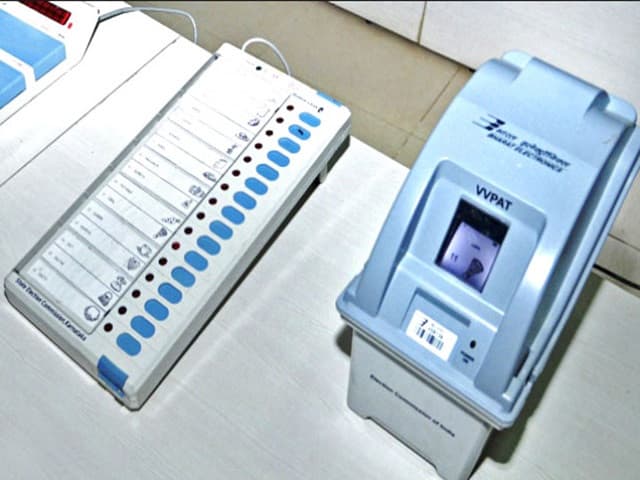
The sharpest Phase 2 controversy came from Falta and Diamond Harbour-linked areas, where BJP leaders alleged that the party's EVM button or symbol was covered with tape, ink or similar material. The West Bengal Chief Electoral Officer said booths would go for repolling if such tampering was verified.
The 2026 EVM row was not about hacking. The BJP alleged physical obstruction of the visible button or symbol; the Election Commission said verified cases could trigger repolling.Election Commission of India via Wikimedia Commons, GODL-India
The Election Commission had already instructed presiding officers to ensure that EVM buttons were not covered with tape, glue, colour, ink, perfume or chemical material. That earlier instruction made the later allegations more significant: this was a known risk, not a random complaint.
April 29, 2026
Phase 2 Voting
South Bengal, Kolkata and Bhabanipur went to polls. BJP alleged EVM button obstruction and polling-agent assault; TMC alleged central-force and Election Commission bias.
NIA Deployment: The Bomb Factor
The Election Commission asked the National Investigation Agency to deploy officials in at least seven Assembly seats during Phase 2 to ensure bombs were not used to disrupt polling. Reports named seats including Kasba, Bhangar, Baruipur and Bishnupur.
This was extraordinary but not surprising in Bengal. Crude bombs are part of the state's poll-violence history. The NIA deployment followed recoveries of crude bombs and reports of a minor blast. Bhangar, specifically, was cited because of its history of poll-related violence.
The deployment also reveals the larger institutional problem: in Bengal, election management is not only about polling staff and EVMs. It often involves central forces, state police, observers, anti-terror investigators and courts.
The Strongroom Battle After Voting
After Phase 2 ended, the fight moved from polling booths to strongrooms.
On April 30, TMC leaders Shashi Panja and Kunal Ghosh staged a dharna outside the Netaji Indoor Stadium/Khudiram Anushilan Kendra strongroom complex in Kolkata, alleging irregularities in the handling of EVMs and ballot materials. TMC claimed CCTV footage showed movement inside the strongroom without proper presence of party representatives. The Election Commission rejected the charge, saying strongrooms were safely secured and sealed and that procedures had been followed. BJP dismissed TMC's claim as rumour-mongering.
Mamata Banerjee also asked party workers and candidates to maintain a round-the-clock vigil over strongrooms and counting centres. The message was blunt: do not assume the fight is over just because polling is over.
That is very Bengal. The election does not end at the booth. It moves to transport, storage, CCTV, postal ballots, counting staff and court orders.
April 30, 2026
Strongroom Row
TMC leaders staged a sit-in in Kolkata alleging irregularities in EVM and ballot handling. The Election Commission denied tampering and said protocols were followed.
May 2 Repoll: Why 15 Booths Matter
On May 1, the Election Commission ordered repolling in 15 polling stations in South 24 Parganas, to be held on May 2. The affected booths were 11 in Magrahat Paschim and 4 in Diamond Harbour.
The EC said the decision was based on reports from Returning Officers, Observers and material circumstances. News reports linked the decision to complaints of irregularities and EVM tampering allegations during the second phase.
Politically, this gives both sides material for their narrative:
BJP can say the repoll order validates its complaint that something went wrong in specific booths.
TMC can say the BJP is using the EC to force voters through repolling in areas where it expects defeat.
The EC can say it is responding institutionally to verified reports rather than party pressure.
The deeper point is that the election is still live. Any article claiming a final result before May 4 is getting ahead of the verified timeline.
May 2, 2026
Repolling in 15 Booths
Repolling is being held in 11 booths of Magrahat Paschim and 4 booths of Diamond Harbour after the Election Commission declared the April 29 poll void in those stations.
Exit Polls: BJP Surge, But Not a Result
Exit polls released after Phase 2 projected a major BJP surge. Republic World's poll-of-polls showed BJP around the majority mark, and P-MARQ projected the BJP in the 150-175 range. Other exit polls also pointed to a tight race or BJP edge, while some suggested TMC resilience.
But Bengal exit polls have been wrong before. The 2021 election is the standing warning: several projections underestimated TMC's final strength. In 2026, the turnout is historic, the SIR changed the voter denominator, and the allegation environment is unusually intense. That makes interpretation risky.
Until May 4, the honest line is simple: the exit polls suggest a possible BJP breakthrough, but the result is not known.
🔴
Not yet a result
The supplied research claimed that TMC won 215 seats on May 4, 2026. That date is still in the future as of this article's May 2 update, so that claim has not been included as fact.
Why Both Sides Can Sound Plausible
The 2026 allegation battle is not a clean story of one pure victim and one obvious manipulator. Bengal's structure lets both sides make claims that sound plausible to their supporters.
The ruling party controls the state government, local police environment, panchayat networks and much of the local welfare and contractor ecosystem. That gives TMC structural advantages at the village and booth level. The BJP experiences this as local rigging.
The BJP controls the Union government. That means central agencies, central forces and national political pressure are part of the election environment. The TMC experiences this as central rigging.
That is the Bengal paradox: the state-level ruling party and the central ruling party can both claim to be the victim of institutional power because both are facing institutions the other side influences.
How the Bengal Allegation Cycle Repeats
Period
Dominant Party
Opposition Charge
Core Mechanism
1972
Congress
Rigging and semi-fascist terror
Police, muscle, intimidation
1977-2011
Left Front
Scientific rigging
Cadres, panchayats, rolls, booth control
2011-2026
TMC
Inherited local coercion system
Panchayat power, local administration, cadre networks
2026
TMC in state; BJP at Centre
Dual rigging allegations
State machinery vs central machinery
What the West Bengal 2026 Election Really Reveals
The 2026 West Bengal election is a modern version of an old story.
What is new:
SIR turned voter-list revision into a mass citizenship controversy.
Artificial-finger allegations brought biometric language into the rigging debate.
EVM obstruction allegations focused on tape, ink, glue and visibility rather than machine hacking.
Strongroom CCTV and postal ballot claims made post-poll storage a frontline issue.
Social media turned every local booth dispute into statewide propaganda within minutes.
What is old:
Polling-agent intimidation.
Fear around panchayat and local welfare access.
Booth-level violence and vandalism.
The losing side preparing to call the process illegitimate.
Courts and election authorities being pulled into political legitimacy wars.
The central question is not only who wins on May 4. It is whether Bengal can ever separate elections from local fear, economic access and institutional mistrust.
Complete Timeline
1972
Congress Victory, Left Boycott
CPI(M) and allies allege rigging in 172 constituencies and accuse Congress of semi-fascist terror. Fourteen CPI(M) MLAs refuse to sit in the Assembly.
1977-2011
Left Front Rule
The CPI(M)-led Left Front builds a powerful cadre and panchayat machine. Critics later describe its electoral methods as scientific rigging.
2011
TMC Takes Power
Mamata Banerjee ends 34 years of Left rule. The political system changes hands, but local coercive incentives remain.
2018
Panchayat Polls Under Fire
TMC wins roughly one-third of seats uncontested. Violence, ballot-box incidents and Supreme Court concern make the election a reference point.
2021
Post-Poll Violence Cases
After TMC's victory, BJP alleges major violence against its workers. The Calcutta High Court orders CBI and SIT probes into categories of cases.
2025-2026
SIR Voter Roll Revision
More than 9 million names are removed from Bengal's voter lists after SIR, triggering a political battle over citizenship, deletion and voter legitimacy.
April 23, 2026
Phase 1 Voting
152 constituencies vote. The Election Commission later reports 93.19% turnout.
April 29, 2026
Phase 2 Voting
142 constituencies vote, including Bhabanipur. BJP alleges polling-agent assault and EVM button obstruction; TMC alleges central-force and EC bias.
April 30, 2026
Strongroom Standoff
TMC leaders protest in Kolkata over alleged strongroom irregularities. The EC rejects tampering claims.
May 2, 2026
Repolling
Repolling is held in 15 booths across Magrahat Paschim and Diamond Harbour.
May 4, 2026
Counting Scheduled
The verified result is expected after counting. Any final winner claim before then should be treated as unverified.
FAQ
Has West Bengal 2026 produced a final result?
No. As of May 2, 2026, counting is scheduled for May 4. Exit polls are available, but the official result is not.
Why did the Election Commission order repolling?
The EC ordered repolling in 15 polling stations after reviewing reports from Returning Officers, Observers and other material circumstances. Reports linked the decision to complaints of irregularities during Phase 2.
What was the SIR controversy?
The Special Intensive Revision removed more than 9 million names from Bengal's voter rolls. The EC and BJP framed it as voter-list cleanup; TMC framed it as disenfranchisement that disproportionately affected vulnerable communities.
What did BJP allege about EVMs?
BJP alleged that its button or symbol was physically covered or obstructed with tape or similar substances in some booths. The EC said verified cases could lead to repolling.
What did TMC allege after polling?
TMC alleged irregularities in strongroom and postal ballot handling in Kolkata, and accused the BJP, Election Commission and central forces of attempting to tilt the process. The EC denied tampering.
Is "scientific rigging" proven?
It is a political term, not a court finding. It describes a set of alleged practices - voter-roll manipulation, polling-agent intimidation, panchayat pressure and area domination - associated by critics with the Left Front era and later Bengal election culture.


 Politics